BRASS POLISHING AND CLEANINGSurface cleaning and polishing of brass candlesticks, fireplace pieces, hardware, lighting, and decorative objects.
Chelsea Plating Company in Philadelphia provides brass polishing and cleaning for clients in the region and throughout the United States. The workshop handles antique brass polishing, routine brass cleaning, and careful brightening of long-used household and decorative pieces. Typical projects include candlesticks and candelabra, fireplace tools and andirons, coal bins, door and cabinet hardware, mail slots, lamps, and table objects. All work is carried out in the Philadelphia workshop; on-site brass polishing is not offered. Many visitors first find the studio while searching for brass polishing near them and choose to send their pieces to Philadelphia after receiving packing guidance.
Send clear photos and dimensions to begin.
|
AT A GLANCE
|
HOUSEHOLD BRASS, FIREPLACE PIECES, AND DECORATIVE OBJECTS
|
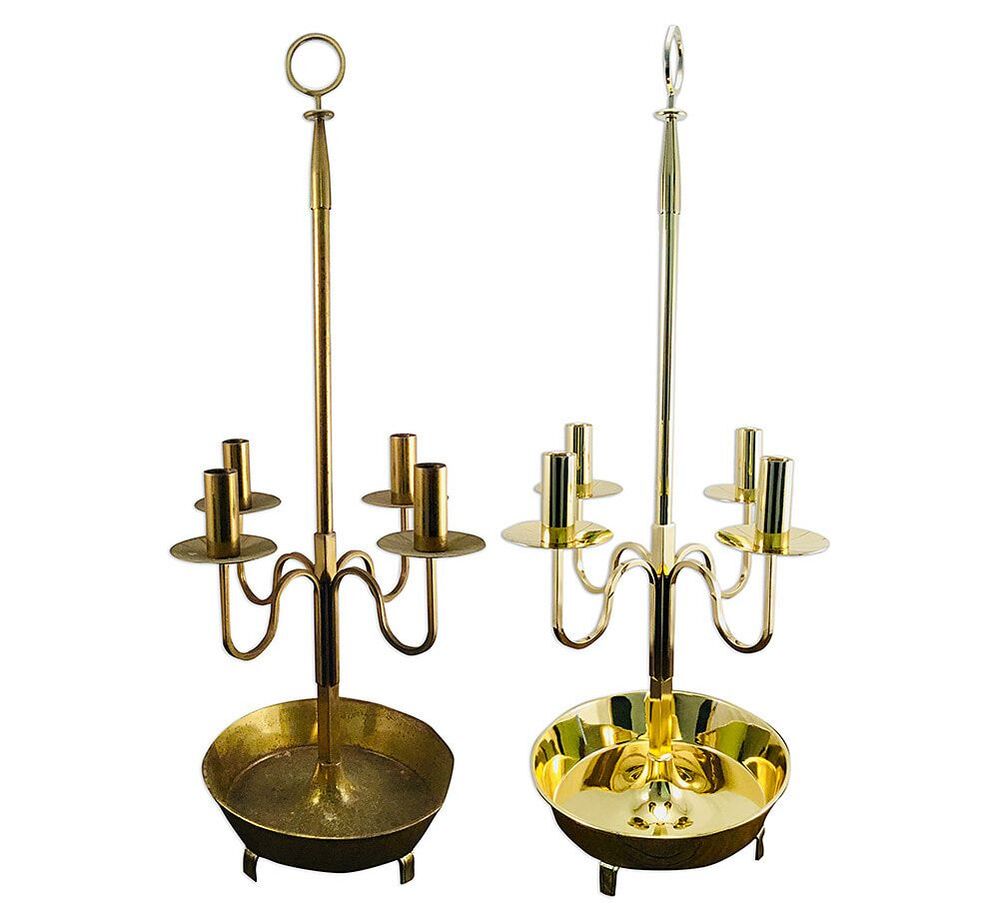
Many polishing projects begin with brass candlesticks, candelabra, and table pieces that have darkened with time. Wax, smoke residue, and general handling can leave surfaces dull and uneven. In the workshop, deposits are softened and removed, surfaces are cleaned in stages, and tarnish is moderated before polishing. Turned stems, drip pans, and bases are treated carefully so that profiles remain crisp and decorative details are preserved.
Fireplace tools, andirons, fenders, and coal or log bins often carry soot and heavy oxidation from years of use. These pieces are cleaned to reduce residues and remove failed coatings so the underlying brass can be clarified. Where a bright finish is desired, polishing is brought to a higher level; where a softer tone is more suitable, work is adjusted so the brass reads clean and cared for without appearing newly manufactured. The aim is a finish that suits both the object and the hearth around it. Decorative brass objects, from samovars and urns to jardinières and small bowls, receive similar attention. Staining and mineral deposits are reduced, loose elements are checked, and surfaces are brought to an appropriate sheen. Throughout, emphasis is placed on retaining tool marks, inscriptions, and casting detail that speak to the object’s history. |
HARDWARE, FIXTURES, AND LIGHTING COMPONENTS
|
Brass hardware and fixtures respond well to careful polishing when surfaces have become dulled by paint, oxidation, or handling. The workshop cleans and polishes door and cabinet hardware, knockers, mail slots, bell pulls, house numbers, and decorative plates. Paint and residues are removed in a controlled way so that edges remain sharp. After polishing, tone can be blended within a set so pieces read consistently when reinstalled.
Lighting projects often focus on desk, table, and Bouillotte lamps, as well as selected chandelier and sconce components. Old surface grime and failing lacquer are reduced, then the brass is polished to clarify stems, arms, and drip pans. Where lamps are also being rewired, metalwork is polished in coordination with that work so sockets, bases, and shades present as a coherent whole. For historical fixtures, bright polish may be moderated slightly to suit the room and age of the piece. Polishing is distinct from structural restoration but often accompanies minor adjustments. Loose collars or finials may be tightened, and small misalignments corrected, so that once the brass is cleaned and brightened the object feels sound in use. |
PROCESS, SHIPPING, AND CARE AFTER POLISHING
|
Most brass polishing projects begin with photographs of the object or set, along with basic dimensions and notes about how the pieces are used or displayed. From this information, the workshop can usually outline whether simple cleaning and polishing will be sufficient or if additional restoration work is recommended. An initial cost range is provided and refined once the brass has been examined in person.
Packing guidance is provided before shipping, including suggestions for padding, separating components, and double-boxing heavier or delicate pieces. Clients in the Philadelphia area commonly hand-deliver by appointment. Clients elsewhere in the United States send pieces to the workshop using these guidelines, and return shipment from Philadelphia is arranged once work is complete. After polishing, brass surfaces are not entirely maintenance-free. Depending on location and handling, some pieces will slowly mellow again. Where appropriate, a protective coating may be applied to help slow tarnish. Care instructions typically recommend gentle dusting, occasional careful wiping, and avoidance of abrasive cleaners and strong chemical polishes that can cut through coatings or erode detail. |
Send clear photos and dimensions to begin.
BEFORE AND AFTER GALLERY
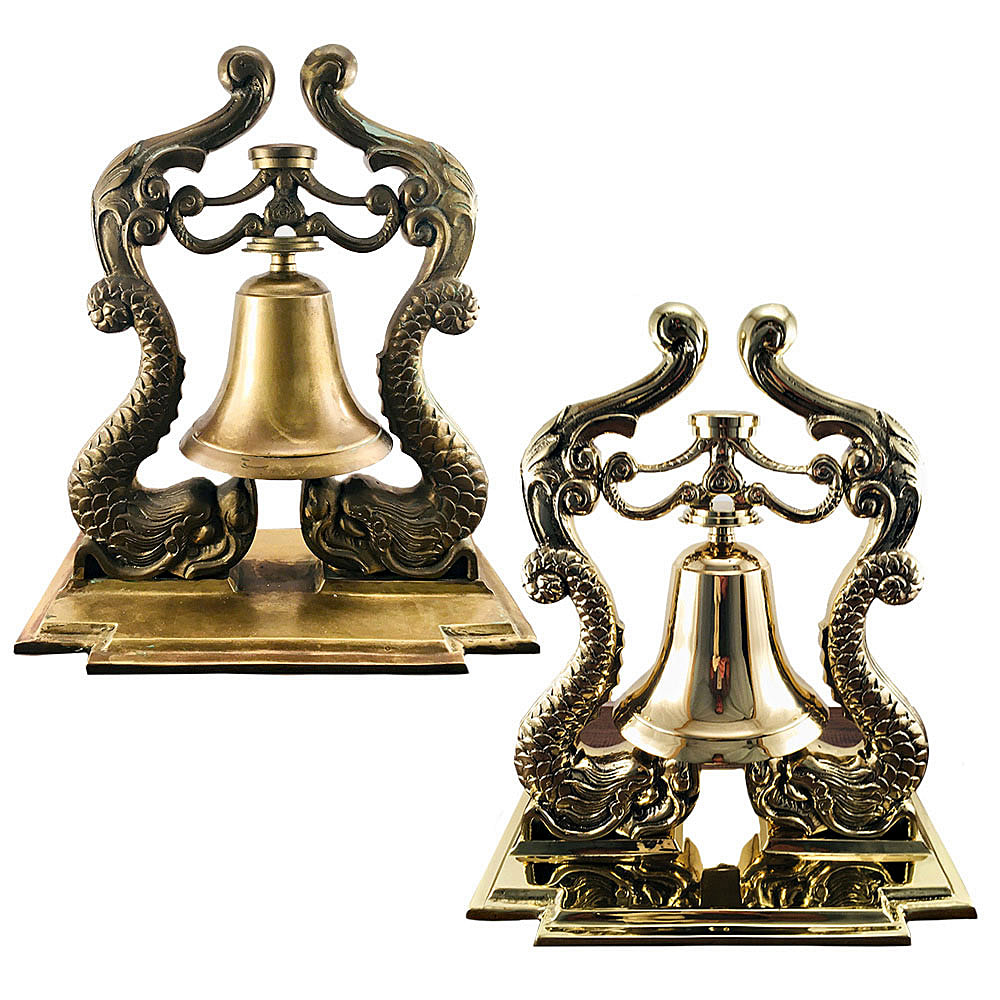
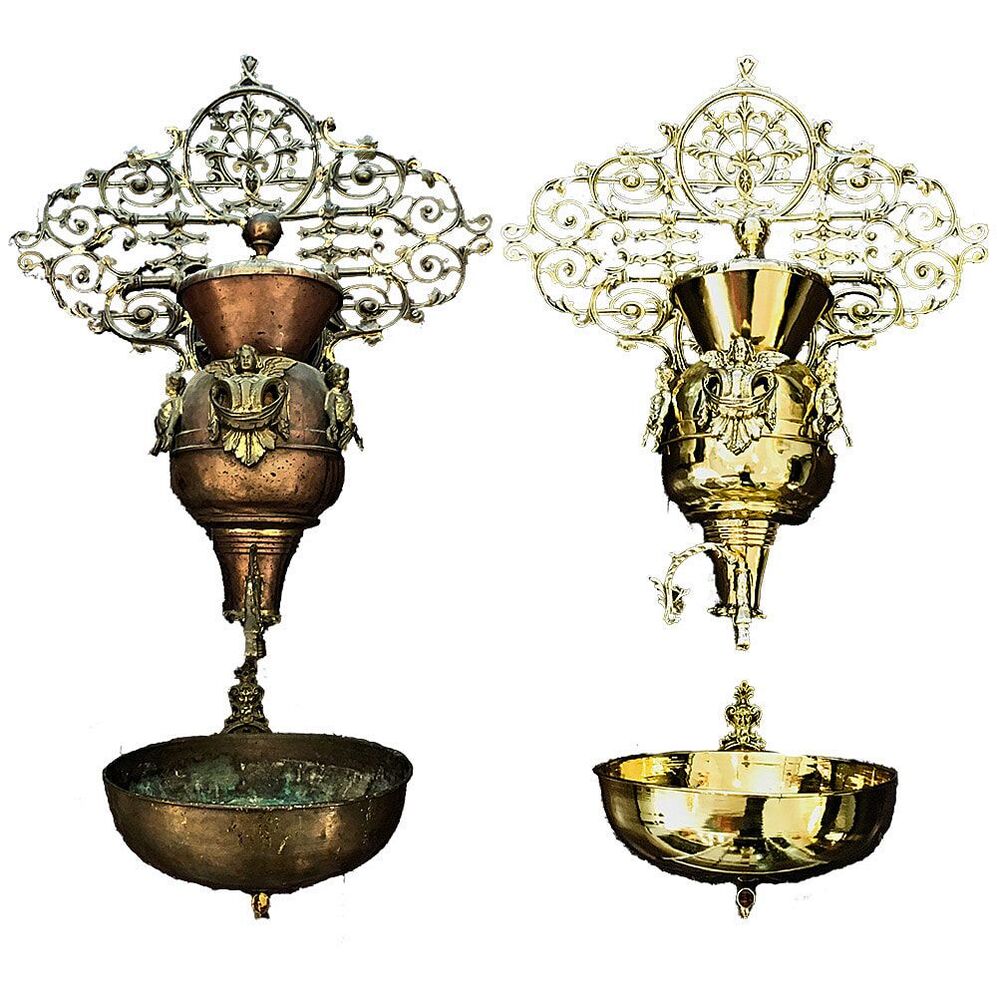
The gallery below shows examples of brass polishing and cleaning, including candlesticks and candelabra, fireplace pieces, door hardware, mail slots, lamps, and decorative objects. Each example illustrates the reduction of wax, soot, tarnish, and staining, and the restoration of a finish that suits the object’s age and use.
|
|
|
FAQ
WHAT TYPES OF BRASS OBJECTS ARE SUITABLE FOR POLISHING AND CLEANING?
Chelsea Plating Company polishes brass candlesticks and candelabra, fireplace tools and andirons, fenders and coal bins, door and cabinet hardware, mail slots, bell pulls, house numbers, table and desk lamps, Bouillotte lamps, and related decorative objects that can be safely shipped to the workshop.
HOW IS BRASS POLISHING DIFFERENT FROM FULL RESTORATION OR REFINISHING?
Polishing and cleaning focus on reducing tarnish, soot, residues, and surface staining and then brightening the brass to an appropriate sheen. Structural repairs, dent removal, and major finish changes may be treated as separate restoration work. In some cases, polishing is combined with refinishing, such as lacquer removal or patina adjustment, when a more thorough finish change is needed.
CAN YOU POLISH BRASS ON-SITE, OR MUST PIECES COME TO THE WORKSHOP?
All brass polishing and cleaning are carried out in the Philadelphia workshop, where tools, materials, and conditions can be controlled. On-site polishing is not offered. Clients in the area usually hand-deliver by appointment, while clients elsewhere in the United States send pieces to the workshop after receiving packing guidance.
HOW LONG WILL THE POLISHED BRASS FINISH LAST?
Longevity depends on how the piece is used and the environment in which it lives. Some objects slowly mellow again, while others stay bright longer, especially if a protective coating has been applied. Gentle dusting, careful handling, and avoidance of abrasive cleaners help maintain the finish. If brass has dulled over time, it can usually be returned for renewed polishing.
HOW DO I REQUEST A BRASS POLISHING ESTIMATE?
To begin, send clear photos of the object or set from several angles, along with dimensions and notes about how the pieces are used or displayed. Using this information, the workshop can typically outline a likely treatment approach and cost range and confirm whether polishing alone is appropriate. Final estimates are confirmed once the objects have been examined in person at the workshop.
Chelsea Plating Company polishes brass candlesticks and candelabra, fireplace tools and andirons, fenders and coal bins, door and cabinet hardware, mail slots, bell pulls, house numbers, table and desk lamps, Bouillotte lamps, and related decorative objects that can be safely shipped to the workshop.
HOW IS BRASS POLISHING DIFFERENT FROM FULL RESTORATION OR REFINISHING?
Polishing and cleaning focus on reducing tarnish, soot, residues, and surface staining and then brightening the brass to an appropriate sheen. Structural repairs, dent removal, and major finish changes may be treated as separate restoration work. In some cases, polishing is combined with refinishing, such as lacquer removal or patina adjustment, when a more thorough finish change is needed.
CAN YOU POLISH BRASS ON-SITE, OR MUST PIECES COME TO THE WORKSHOP?
All brass polishing and cleaning are carried out in the Philadelphia workshop, where tools, materials, and conditions can be controlled. On-site polishing is not offered. Clients in the area usually hand-deliver by appointment, while clients elsewhere in the United States send pieces to the workshop after receiving packing guidance.
HOW LONG WILL THE POLISHED BRASS FINISH LAST?
Longevity depends on how the piece is used and the environment in which it lives. Some objects slowly mellow again, while others stay bright longer, especially if a protective coating has been applied. Gentle dusting, careful handling, and avoidance of abrasive cleaners help maintain the finish. If brass has dulled over time, it can usually be returned for renewed polishing.
HOW DO I REQUEST A BRASS POLISHING ESTIMATE?
To begin, send clear photos of the object or set from several angles, along with dimensions and notes about how the pieces are used or displayed. Using this information, the workshop can typically outline a likely treatment approach and cost range and confirm whether polishing alone is appropriate. Final estimates are confirmed once the objects have been examined in person at the workshop.
Send clear photos and dimensions to begin.
RELATED PAGES
- Brass, Copper and Bronze Restoration — Broad restoration of brass, copper, and bronze lighting and metalwork.
- Brass Restoration and Repair — General restoration for brass fireplace pieces, hardware, and decorative objects.
- Brass Refinishing and Lacquer Removal — Finish-level work when brass needs tone adjustment or relacquering.
- Brass Bed Restoration — Structural and finish restoration for antique and vintage brass beds.
- Request an Estimate — Send photos and dimensions to begin your project.