STERLING SILVER POLISHING AND CLEANINGPolishing and cleaning for sterling silver tableware, flatware, hollowware, and decorative pieces.
Chelsea Plating Company in Philadelphia polishes and cleans sterling silver for clients in the city and throughout the United States. Many pieces arrive with heavy tarnish, uneven past polishing, or older protective coatings that now look yellow and dull. Typical projects include sterling flatware and serving pieces, tea and coffee services, trays, bowls, candlesticks, frames, and smaller decorative objects. Each piece or service is reviewed to understand its use, surface history, and engraved detail before any polishing begins. Some clients first search for sterling silver polishing or silver cleaning near them and then decide to ship to the workshop once they see how carefully sterling surfaces can be clarified without overworking the metal.
Send clear photos and dimensions to begin.
|
AT A GLANCE — STERLING SILVER POLISHING AND CLEANING
|
STERLING SILVER TABLEWARE AND FLATWARE
|
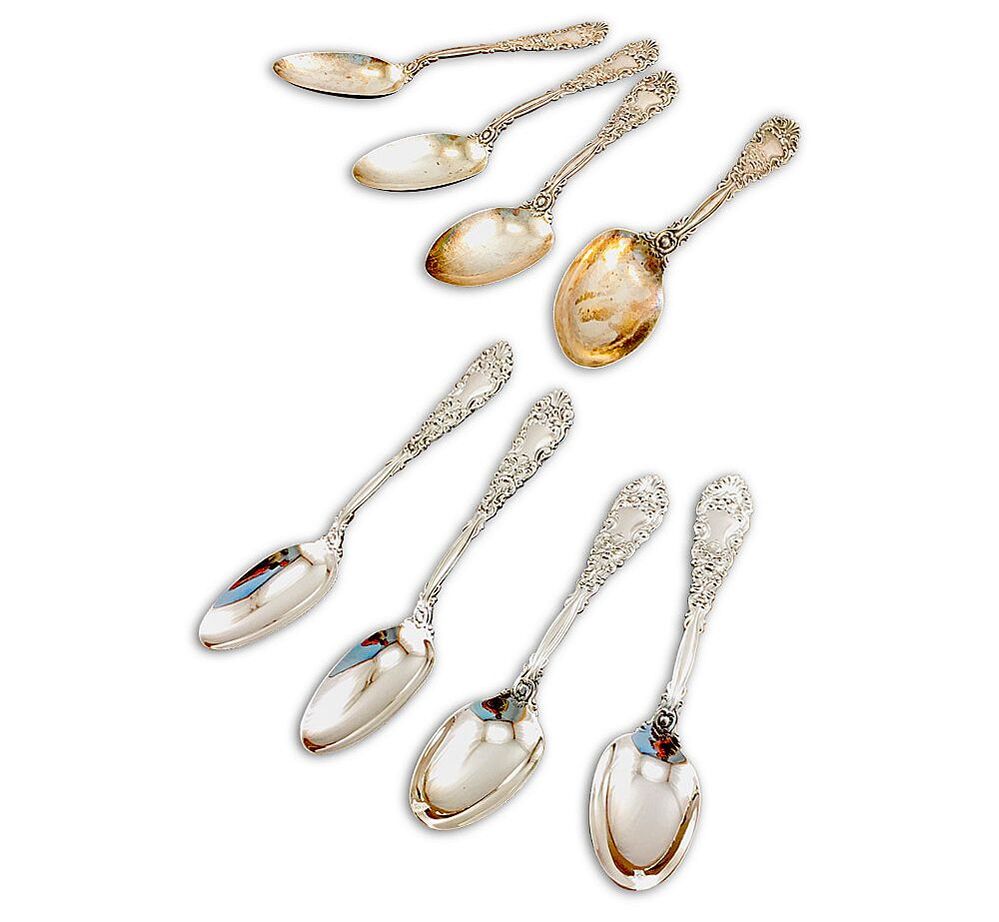
Sterling silver tableware and flatware often arrive at the workshop with a mix of deep tarnish, uneven hand-polishing, and older scratches that catch light in distracting ways. Forks, spoons, serving pieces, carving sets, and large services are evaluated as groups so the overall read at the table or in storage is considered alongside the condition of individual pieces. Areas of concern such as knife junctions, thin spoon bowls, or high-contact serving surfaces are noted before any surface work begins.
Tarnish reduction and polishing for sterling flatware focus on preserving pattern and profile while restoring clarity to the surface. Tarnish is lowered in stages to protect the gauge of the metal, and polishing is carried out with appropriate compounds and tools so that relief remains crisp and edges do not become overly rounded. Where large services are involved, pieces are handled in a way that supports a consistent finish across the set, whether the aim is a bright, mirror-like appearance or a more reserved satin tone. Not all marks are removed in the interest of maintaining the character of a well-used service. Light, historic wear in low areas is often left to provide depth and keep the pieces appropriate to their age. Where bowls or tines show structural thinning, the limits of polishing are explained so metal is not over-worked in pursuit of an unrealistic surface. |
TEA AND COFFEE SERVICES, TRAYS, AND DECORATIVE STERLING
|
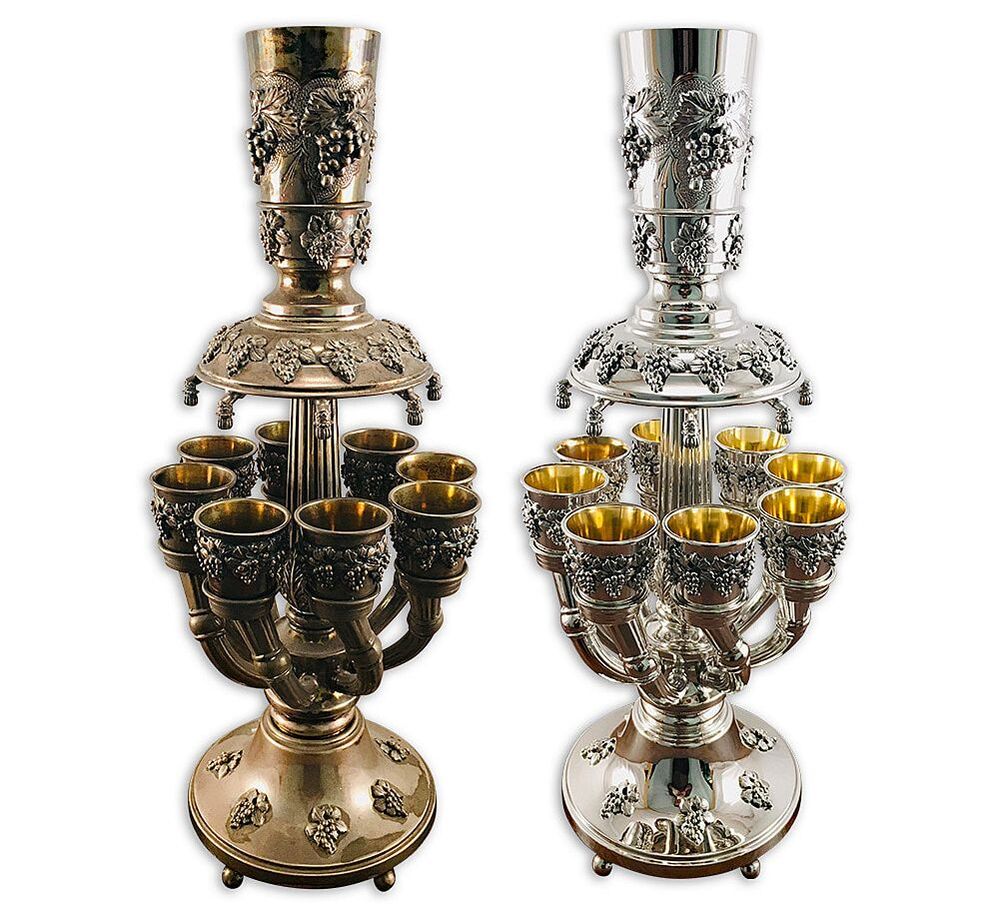
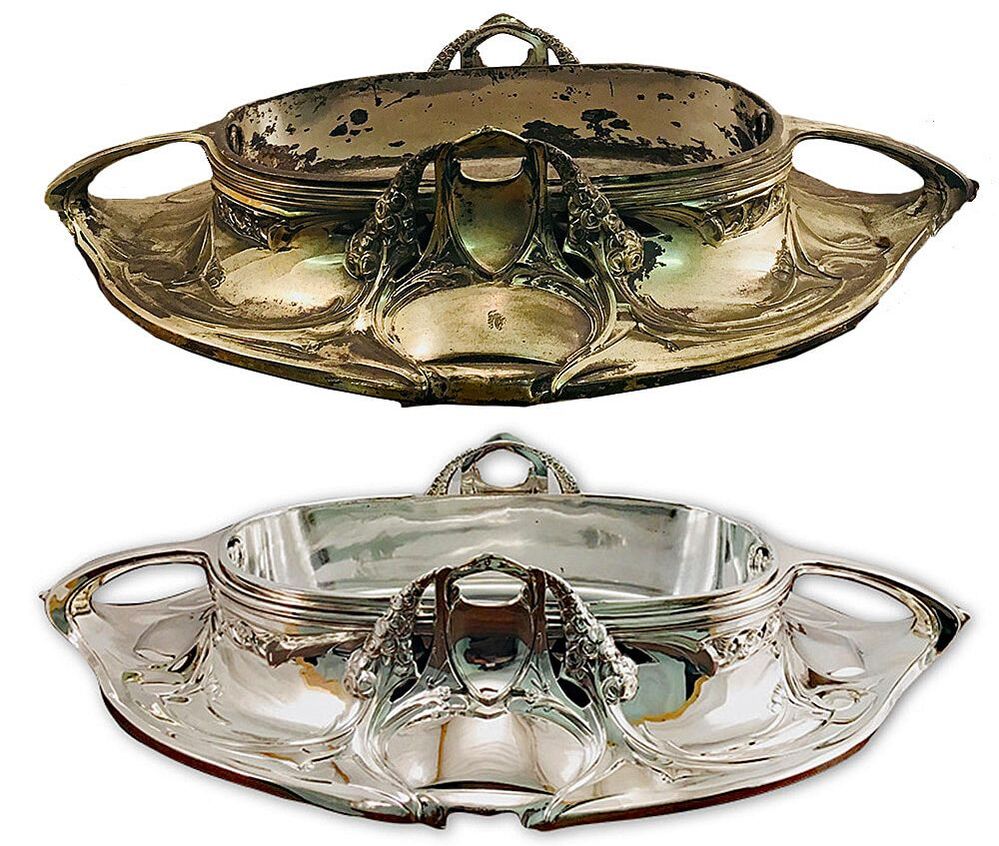
Sterling tea and coffee services, trays, bowls, and candlesticks frequently show heavy tarnish, lacquer breakdown, and uneven sheen that mask design and detail. Pots, sugar bowls, creamers, waste bowls, and associated trays are treated as coherent sets so lids, handles, spouts, and rims are considered together. Before polishing, pieces are checked for loose finials, softened soldered joints, and any obvious structural concerns that may require repair rather than surface work alone.
Old lacquer, residues, and accumulated cleaning products are removed where necessary so that the underlying silver can be addressed directly. Polishing then proceeds with controlled wheel work on broad, smooth fields—such as tray centers or the bodies of pots—and extensive hand work in chased borders, repoussé decoration, and around joints. Engraved inscriptions, crests, and monograms are preserved, and maker’s marks are kept legible. Where a tray or centerpiece shares the table with other sterling, finishes are tuned so pieces sit comfortably together. Decorative sterling objects such as frames, small vases, and desk items are approached with the same emphasis on clarity and restraint. The goal is not to erase all signs of age but to reduce tarnish, remove distracting residues, and restore a coherent, appropriate finish that suits the form and intended use of each piece. |
FINISHES, PATINA, AND WHEN POLISHING IS ENOUGH
|
Sterling silver can be finished to different levels depending on how it will be used and how it reads alongside other objects. Some pieces benefit from a bright, highly reflective surface that emphasizes sharp profiles and crisp engraving. Others are better served by a softer satin or semi-bright finish that reduces glare and allows delicate chasing or subtle contours to read calmly. In both cases, work is planned to protect important surface information and avoid unnecessary thinning of the metal.
Polishing is often sufficient when tarnish is the primary issue and when underlying surfaces are still sound. In those cases, careful cleaning and controlled polishing can dramatically clarify a piece without any need for structural repair or replating. Where deep scratches, dents, or structural issues are present, or where a plated surface has worn through to base metal, other treatments such as repair or replating may be recommended instead or in addition. The workshop can usually indicate from photos whether polishing alone is appropriate or whether a different approach may be more responsible. Patinated or deliberately darkened areas, such as backgrounds behind engraving or within low recesses of a design, are treated thoughtfully. In many cases, a trace of deeper tone is left in these areas to maintain depth and legibility rather than pushing everything to a uniform, new-looking brightness. The aim is a finish that feels consistent with the piece’s age and use while still resolving the harsh contrast and unevenness of accumulated tarnish. |
PROCESS, SHIPPING, AND PROJECT SCOPE
|
Most sterling silver polishing projects begin with photos and basic dimensions sent through the estimate form. From these, the workshop can often identify obvious structural concerns, the extent of tarnish, and any areas where surface thinning or earlier repairs may limit treatment. An initial polishing plan or range can usually be provided from this information, with the understanding that final details are confirmed after in-person examination at the bench.
Once pieces arrive at the Philadelphia workshop, they are examined more closely. If structural issues or past repairs are discovered that could affect surface work, these are discussed with the client before polishing proceeds. Tarnish and residues are then reduced in controlled stages, and polishing is carried out in a way that respects the original finish, engraved detail, and the thickness of the metal. After polishing, pieces are carefully rinsed, dried, and inspected under clear light to confirm that surfaces are even and coherent. Clients ship pieces to the workshop after receiving packing guidance so objects are supported and protected in transit. When the project is complete, return shipping is arranged from the studio. Only objects that can be safely shipped or hand-delivered are accepted, and no on-site polishing or repair is offered. |
Send clear photos and dimensions to begin.
BEFORE AND AFTER GALLERY
The sterling silver polishing gallery shows typical outcomes for tableware, flatware, tea and coffee services, and decorative pieces that have been carefully cleaned and polished. Some examples focus on heavy tarnish and old coatings that once obscured form and decoration, while others illustrate subtle refinements such as softened scratches, clarified engraving, or finishes adjusted to sit comfortably with existing services. Each piece is assessed individually so that polishing supports the stability, use, and visual character of the silver rather than simply chasing maximum brightness.
|
|
|
FAQ — STERLING SILVER POLISHING AND CLEANING
WHAT TYPES OF STERLING SILVER DO YOU POLISH?
Chelsea Plating Company polishes and cleans sterling flatware and serving pieces, tea and coffee services, trays, bowls, candlesticks, frames, and smaller decorative objects that can be safely shipped or hand-delivered to the Philadelphia workshop. Individual pieces and larger matched services are both welcome, and groups are often treated together so finishes read consistently.
WILL POLISHING REMOVE ENGRAVING, MONOGRAMS, OR MAKER’S MARKS?
Polishing is planned to preserve engraved decoration, monograms, and maker’s marks. Tarnish is reduced in stages, and abrasives are chosen and applied with care so that detail remains legible. Over-polishing from earlier treatments cannot be reversed, but current work is carried out conservatively to avoid unnecessary loss of material and to respect the history of the piece.
HOW BRIGHT WILL THE FINISH BE, AND CAN SOME AGE BE LEFT?
Finishes can range from a softer satin or semi-bright appearance to a high, mirror-like polish, depending on what suits the object and how it will be used. In many cases, a slightly deeper tone is left in recesses and low areas to provide depth and keep the piece appropriate to its age. The aim is a calm, clarified surface rather than an aggressively new look, and preferences can be discussed as part of the estimate.
HOW OFTEN SHOULD STERLING SILVER BE POLISHED?
Sterling silver does not need frequent heavy polishing. Gentle dusting, careful hand-washing, thorough drying, and occasional use of a silver-safe cloth are usually sufficient between more thorough treatments. Full polishing is recommended only when tarnish has built up to the point where pieces no longer read as silver or when uneven earlier cleaning has left a blotchy appearance. Over-polishing can thin surfaces, so restraint is an important part of long-term care.
HOW DOES SHIPPING WORK FOR STERLING SILVER POLISHING?
All polishing and cleaning work is completed in the Philadelphia workshop. Before you ship, you receive packing guidance so pieces are supported and protected in transit. Clients ship pieces to the workshop, and when the project is finished, return shipping is arranged from the studio. No on-site polishing or repair is offered.
Chelsea Plating Company polishes and cleans sterling flatware and serving pieces, tea and coffee services, trays, bowls, candlesticks, frames, and smaller decorative objects that can be safely shipped or hand-delivered to the Philadelphia workshop. Individual pieces and larger matched services are both welcome, and groups are often treated together so finishes read consistently.
WILL POLISHING REMOVE ENGRAVING, MONOGRAMS, OR MAKER’S MARKS?
Polishing is planned to preserve engraved decoration, monograms, and maker’s marks. Tarnish is reduced in stages, and abrasives are chosen and applied with care so that detail remains legible. Over-polishing from earlier treatments cannot be reversed, but current work is carried out conservatively to avoid unnecessary loss of material and to respect the history of the piece.
HOW BRIGHT WILL THE FINISH BE, AND CAN SOME AGE BE LEFT?
Finishes can range from a softer satin or semi-bright appearance to a high, mirror-like polish, depending on what suits the object and how it will be used. In many cases, a slightly deeper tone is left in recesses and low areas to provide depth and keep the piece appropriate to its age. The aim is a calm, clarified surface rather than an aggressively new look, and preferences can be discussed as part of the estimate.
HOW OFTEN SHOULD STERLING SILVER BE POLISHED?
Sterling silver does not need frequent heavy polishing. Gentle dusting, careful hand-washing, thorough drying, and occasional use of a silver-safe cloth are usually sufficient between more thorough treatments. Full polishing is recommended only when tarnish has built up to the point where pieces no longer read as silver or when uneven earlier cleaning has left a blotchy appearance. Over-polishing can thin surfaces, so restraint is an important part of long-term care.
HOW DOES SHIPPING WORK FOR STERLING SILVER POLISHING?
All polishing and cleaning work is completed in the Philadelphia workshop. Before you ship, you receive packing guidance so pieces are supported and protected in transit. Clients ship pieces to the workshop, and when the project is finished, return shipping is arranged from the studio. No on-site polishing or repair is offered.
Send clear photos and dimensions to begin.
RELATED
- Silver Restoration and Repair — Overview of silver restoration, repair, and surface treatment.
- Silver Repair — Structural repair for sterling and silverplate before finishing.
- Silver Plating and Replating — Replating worn or patchy silverplate tableware and decorative objects.
- Request an Estimate — Send photos and dimensions to begin your sterling silver project.