Chelsea Plating Company
  • Home
  • About
  • Restoration Services
    • Silver Restoration and Repair >
      • Silver Repair Services
      • Silver Plating and Replating
      • Sterling Silver Polishing and Cleaning
    • Brass, Copper and Bronze Restoration and Repair >
      • Brass Restoration and Repair
      • Brass Polishing and Cleaning
      • Brass, Copper and Bronze Refinishing and Lacquer Removal
      • Antique Brass Hardware Restoration and Refinishing
      • Brass Bed Restoration and Polishing
    • Gold, Gilding and Plated Surface Restoration >
      • Gilded and Gold-Plated Decorative Object Restoration
      • Gilded Frame and Mirror Restoration and Repair
      • Gold Plating and Replating
    • Ceramic and Porcelain Restoration and Repair >
      • Ceramic Restoration and Pottery Repair
      • Porcelain Repair and Fine China Restoration
      • Fine China and Dinnerware Repair
      • Pottery and Studio Ceramics Repair
      • Ceramic Vase and Decorative Object Repair
      • Ceramic Lamp and Lighting Base Restoration
      • Porcelain and Ceramic Figurine Restoration
    • Antique Lamp and Light Fixture Restoration >
      • Lamp and Chandelier Rewiring and Restoration
    • Heirloom, Decorative Art and Religious Object Restoration and Repair >
      • Trophy Repair and Presentation Piece Restoration
      • Religious and Ecclesiastical Metal Object Restoration
      • Samovar Restoration and Repair
      • Judaica Restoration and Repair
  • Contact
  • Frequently Asked Questions
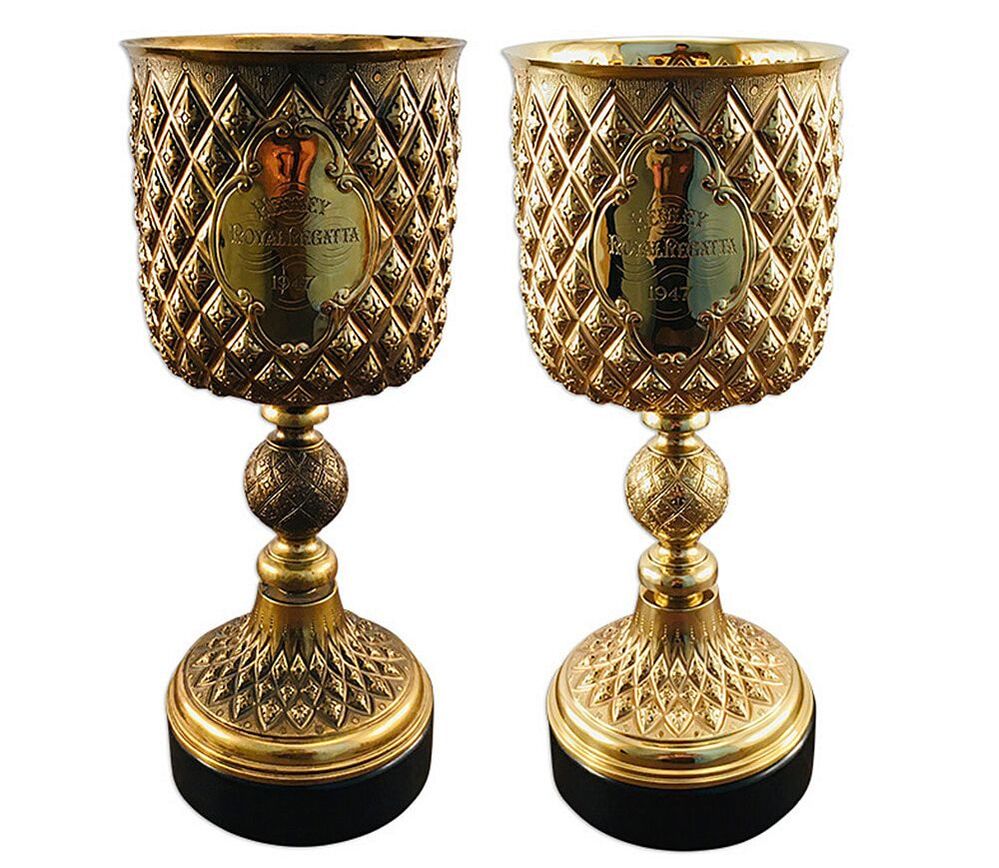
Before-and-after view of the Henley Royal Regatta “Diamond Challenge Sculls” trophy, a tall stemmed cup with narrow side handles and a deep diamond or pineapple pattern, shown first with a dull patchy gold surface and then with a bright even 24k gold finish that clarifies the engraved shield and lattice decoration.
Henley Royal Regatta “Diamond Challenge Sculls” trophy — worn silver-gilt surface reduced, 24k gold replated, engraved shield and diamond lattice detail clarified.

GOLD PLATING AND REPLATING

Gold plating and replating for decorative, liturgical, and presentation objects in suitable metals.
Chelsea Plating Company in Philadelphia restores and renews gold-plated finishes on decorative, liturgical, and presentation pieces for clients in the city and throughout the United States. The studio regularly treats objects such as candlesticks, bowls, chalices, mounts, selected trophies, and certain hardware where gold surfaces have thinned, worn, or become patchy over time. Structural condition is reviewed first, then suitable areas are prepared and replated so that inscriptions, pattern detail, and important markings remain clear. Many people find the workshop while searching for gold plating or gold replating near them and discover that the focus here is on substantial objects rather than jewelry or industrial parts. Treatment plans are shaped around each piece’s construction, use, and history.
REQUEST AN ESTIMATE
​Send clear photos and dimensions to begin.

AT A GLANCE — GOLD PLATING AND REPLATING

  • Gold plating and replating for suitable decorative, liturgical, and presentation objects
  • Candlesticks, bowls, chalices, mounts, selected trophies, and certain hardware or small components
  • Structural review and stabilization before any plating or refinishing is considered
  • Controlled surface preparation to preserve engraving, relief detail, and maker’s marks
  • Gold color and sheen tuned to the object, from soft to brighter reflective finishes
  • Options for partial, localized replating where full stripping is not appropriate
  • Not a general jewelry or watch plating shop; not suited to high-volume or industrial runs
  • Only objects that can be safely shipped or hand-delivered to Philadelphia; no on-site work
  • Packing guidance provided before shipping; return shipping arranged from the Philadelphia workshop
  • Realistic limits where metal is very thin, heavily corroded, or structurally compromised
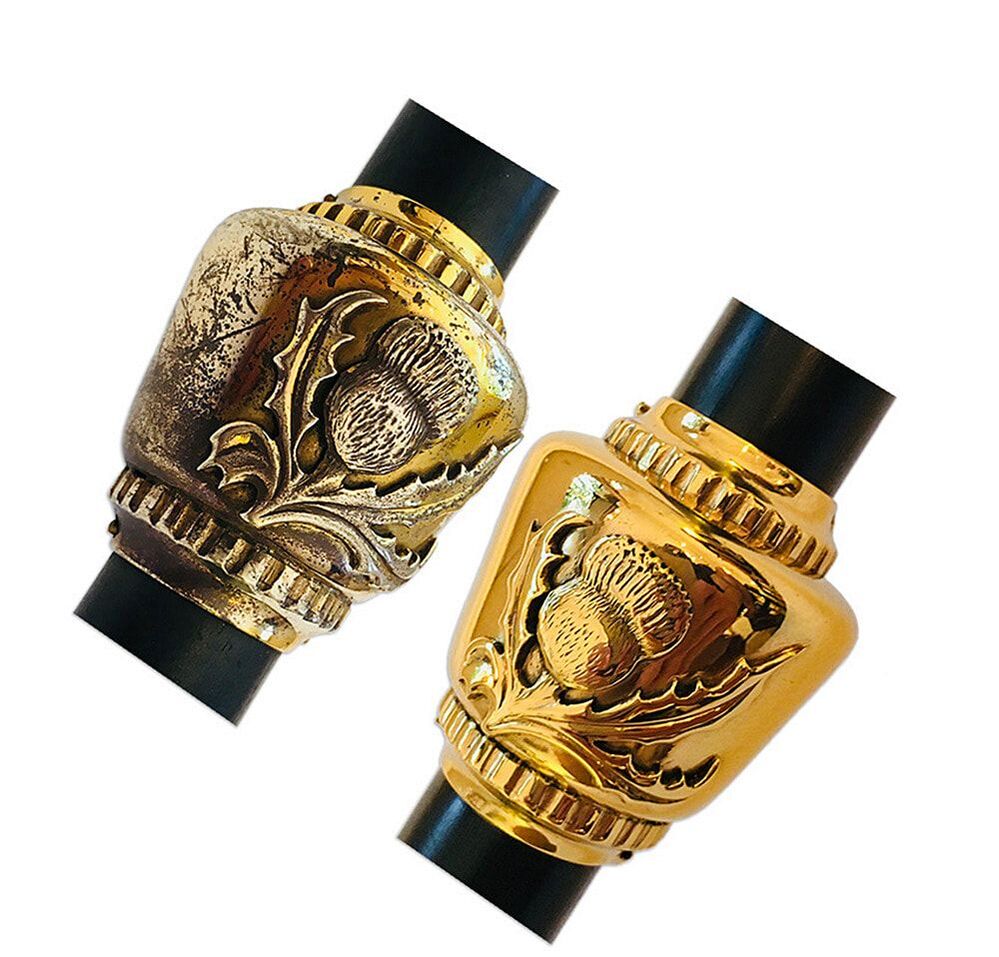
Before-and-after view of a gold-plated section from the University of Pennsylvania ceremonial mace, shown first dull, scratched, and uneven in tone, then bright and smooth with engraved university seals and inscriptions clearly visible.
University of Pennsylvania ceremonial mace detail — worn gold plating reduced, surface prepared and re-gilded, seals and inscriptions clarified.

GOLD-PLATED CANDLESTICKS, BOWLS, AND DECORATIVE OBJECTS

​Many gold-plated decorative pieces arrive with finishes that have become uneven after years of polishing and handling. Common issues include thin or missing gold on high points, patchy color, exposed base metal along rims or edges, and surfaces that no longer read as coherent. The workshop begins by reviewing the structure, checking joins, soldered seams, and any previous repair work so that loose or weakened areas can be stabilized before surface treatment.

Where gold plating is appropriate, preparation is carried out with restraint. Old coatings and residues are reduced, and the surface is refined just enough to support a new deposit while preserving engraved lines, relief ornament, and maker’s marks. A new layer of gold is applied in controlled thickness so that the refreshed finish suits the object’s form and use rather than appearing overly bright or heavy.
​
After plating, surfaces are gently polished to clarify reflection and tune the overall sheen, from a softer glow for older pieces to a somewhat brighter finish for later work. Final detailing focuses on transitions around rims, feet, and ornament so that the gold reads as even and deliberate across the piece while normal signs of age remain subtle.
Three-quarter view of a restored silver-plated pedestal tazza compote with a bright polished silver exterior, richly gold-washed fluted interior, and densely ornamented stem and foot.
Silver-plated tazza compote — worn silver and gold finishes reduced, exterior replated in silver, interior gold wash renewed and ornament clarified.

LITURGICAL, CEREMONIAL, AND COMMEMORATIVE GOLD-PLATED OBJECTS

​Gold-plated liturgical and ceremonial objects often carry deep significance for congregations and institutions. Chalices, patens, ciboria, sanctuary lamps, and presentation pieces may show worn or discolored interiors, softened gilding on contact points, or areas where underlying metal begins to influence color. Chelsea Plating’s work centers on stabilizing structure, treating surfaces with respect, and presenting a finish that is appropriate to ritual or ceremonial use.

Structural assessment comes first, with attention to stems, bases, and joints, as well as any previous soldering or reinforcement. Interior surfaces and lips that come into contact with wine or other elements are evaluated with particular care, and treatment options are discussed in light of intended use and existing condition. In some cases, full replating may be suitable; in others, limited cleaning and local adjustment may better preserve original material.
​
When replating proceeds, surface preparation is as light as possible while still providing a stable base for the new gold layer. Engraved dedications, symbols, and iconography are protected, and the color of the gold is tuned so that it supports the object’s character rather than overwhelming it. The aim is a finish that reads as coherent and respectful of the piece’s liturgical or commemorative role.
Ornate Baroque-style gold Eucharistic chalice with an engraved cup, sculpted node, and figural medallions on a lobed base, shown after restoration with an even high-karat gilded finish and clearly defined scrollwork and saint figures.
Baroque Eucharistic chalice — worn gilding reduced, surfaces prepared and replated in high-karat gold, figural medallions and chased ornament clarified.

GOLD-PLATED DECORATIVE DETAILS AND SMALL COMPONENTS

Some projects involve gold-plated decorative details and small components such as mounts, trim, and selected hardware on larger objects. These may include mounts on decorative boxes, highlights on pedestals, trim on plaques, or small elements on sculptural or liturgical pieces where gold is used to mark out specific forms. Over time, these areas often show wear at contact points, on projections, and along edges where past cleaning has thinned the gold layer. The workshop considers how these gold-plated details relate to the surrounding materials and finishes so that any replating keeps the object visually balanced.

Where practical, only the gold-plated areas are prepared and replated, leaving stable adjacent finishes undisturbed. Preparation is localized, and masking and handling are planned to protect surrounding surfaces during plating and subsequent polishing.
​
After treatment, gold-plated details are adjusted in tone and sheen to sit comfortably with nearby materials such as bronze, brass, silver, wood, stone, or painted surfaces. The goal is for these refreshed accents to clarify the design and highlight important elements without making the object look newly manufactured or unevenly reworked.
Before-and-after view of a pair of covered porcelain urns with painted pastoral scenes, shown first with dull silver-colored metal mounts and then with bright 24k gold-toned mounts that frame the cleaned, more vivid porcelain panels.
Pair of silver-mounted porcelain urns — tarnish reduced, metal mounts prepared and re-plated in 24k gold, porcelain scenes cleaned and detail clarified.

PROCESS, SHIPPING, AND PROJECT SCOPE

​Gold plating and replating projects begin with clear photos and basic dimensions, along with notes about the object’s use, material, and any known prior work. From these, the workshop can often determine whether plating is likely to be appropriate or whether alternatives such as careful cleaning or local retouching may be better suited. The scope is then confirmed once the piece arrives at the Philadelphia workshop and can be examined in person, including tests where needed to understand the existing plating and base metal.
​
Chelsea Plating accepts only objects that can be safely shipped or hand-delivered to the studio; very large, permanently installed, or industrial components fall outside the workshop’s scope. Chelsea Plating provides packing guidance before you ship so the object can travel safely, and arranges return shipping from the Philadelphia workshop using appropriate packing. In some cases, heavy corrosion, very thin metal, or complex prior work may limit how far surface preparation and replating can safely go, and the studio will outline these limits before proceeding.
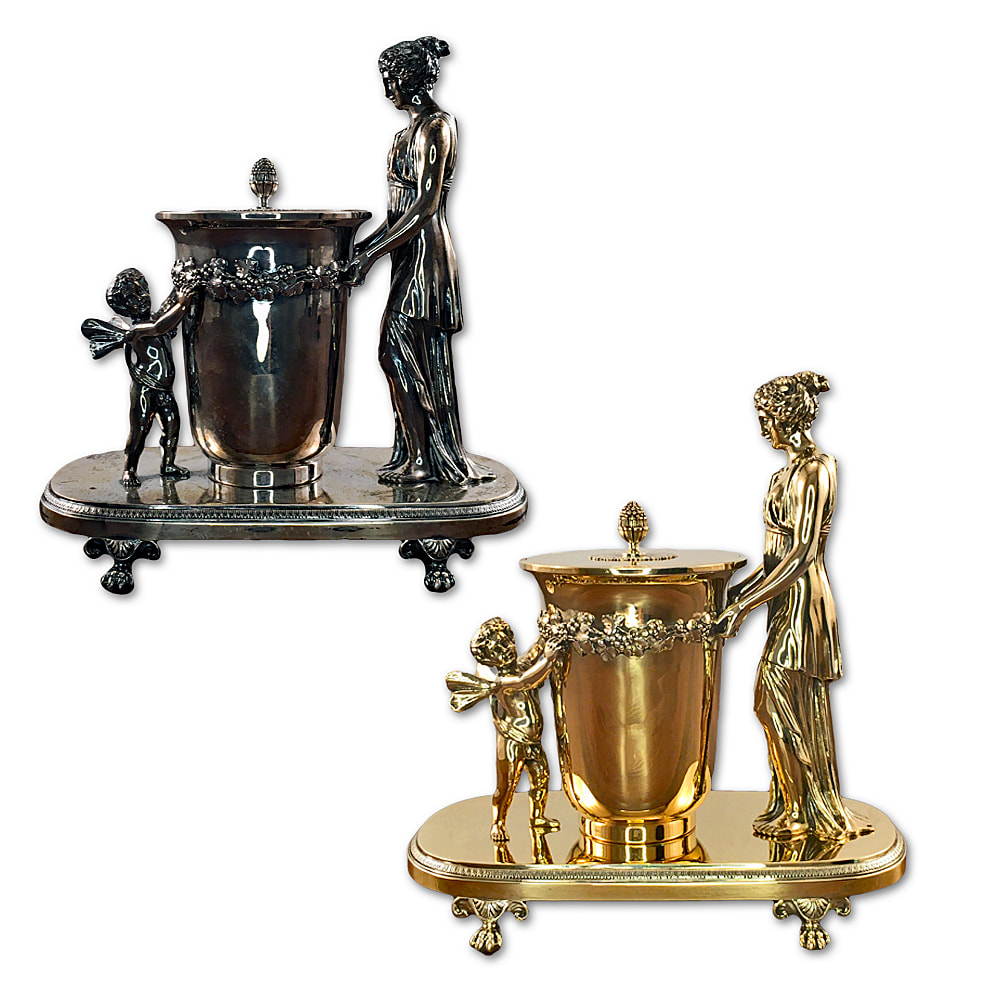
Before-and-after view of a French figural sterling salt cellar attributed to Odiot, with a classical maiden and winged putto flanking a lidded urn on a rectangular base, shown first as dark, heavily tarnished silver and then with an even bright gold vermeil finish that clarifies the figures, garland, and paw feet.
French figural sterling salt cellar, attributed to Odiot — heavy tarnish reduced, surfaces prepared and finished as bright 24k vermeil, figural detail clarified.
REQUEST AN ESTIMATE
​Send clear photos and dimensions to begin.

BEFORE AND AFTER GALLERY

​The examples below illustrate typical outcomes of gold plating and replating work, from localized repairs on worn edges to complete refinishing of suitable objects. Each piece is evaluated individually, and recommended treatments are shaped around its construction, condition, and role, so results will vary according to what is safe and appropriate.
Before-and-after view of an ornate gilt monstrance with blue enamel panels, radiating sunburst rays, and a standing figure at the base, shown first with dark, patchy gold and dulled rays, then with a bright even gold finish, crisp rays, and clearly defined enamel and base decoration.
Enamelled Baroque monstrance — tarnished gilding reduced, principal surfaces selectively re-plated in gold, rays, base, and enamelled detail cleaned and clarified.
Pair of restored Victorian silver and glass bird-form claret jugs, each with a clear glass body, silver head, neck, wings, and legs, and bright gold-toned beaks and feet, shown standing side by side against a white background.
Victorian silver-mounted bird-form claret jugs — tarnish reduced, selective parcel gilding renewed, glass bodies cleaned and detail clarified.
Restored Baroque silver-gilt “Apostles” chalice with a gold interior, grape-and-vine band, and silver relief figures of saints on the cup and lobed base, shown with bright two-tone metalwork and crisp figural details.
Baroque silver-gilt “Apostles” chalice — tarnished two-tone finish reduced, gold and silver surfaces selectively replated, relief figures and vine ornament clarified.
Before-and-after view of an oval Odiot sterling silver serving tray with six matching cup holders, shown first in a dull tarnished silver tone and then with an even 24k gold vermeil surface that clarifies the engraved pattern, pierced gallery, and handles.
Odiot sterling serving tray with cup holders — heavy tarnish reduced, surfaces prepared and polished, full 24k gold vermeil finish applied.
Before-and-after view of the gold-plated head of the University of Pennsylvania ceremonial mace, shown first dull, scratched, and uneven in tone, then bright and smooth with a clear engraved university seal, arms, and motto.
University of Pennsylvania ceremonial mace head — worn gold plating reduced, surface prepared and re-gilded, seals and inscriptions clarified.
Before-and-after view of the Philadelphia Challenge Cup “Gold Cup” rowing trophy, a tall twin-handled solid-gold cup shown first slightly dull with uneven reflection and then bright and even, with crisp engraving and smooth, refined handles.
Philadelphia Challenge Cup “Gold Cup” trophy — historic solid-gold rowing prize cleaned, surface soils reduced, engraving and tapered form clarified.
Restored gilt bronze bust of Queen Victoria wearing a crown and layered lace shawl, mounted on a stepped gilt and dark green marble base, shown with an even bright gold surface that clearly defines the facial features and textured drapery.
Gilt bronze bust of Queen Victoria — worn gilding reduced, surface cleaned, gold leaf finish renewed and portrait detail clarified.
Before-and-after view of a gold and silver ciborium with a small cross finial, shown first with darkened, worn gold and a dull silver decorative band, then with a bright gold cup, lid, stem, and base and a crisp contrasting silver Gothic-style band around the bowl.
Gold and silver ciborium — worn dual-tone finish reduced and selectively replated, gold and silver surfaces polished and clarified for continued liturgical use.
Tall Islamic-style gold-plated metal ewer with a bulbous lower body, tapered upper section, long spout, and looped handle, shown with an even bright gold finish and crisp engraved geometric and vegetal decoration.
Islamic-style ewer — tarnished gold finish reduced, 24k plating renewed, engraved geometric and arabesque ornament clarified.
Ornate Renaissance Revival silver-gilt ewer with a tall scroll handle, bulbous body, flared spout, and dense chased decoration, set with purple cabochon stones and blue enamel medallions, shown after restoration with an even 24k gold-toned finish.
Renaissance Revival gem-set silver ewer — worn silver-gilt surface reduced, 24k gold vermeil renewed, enamel and cabochon settings cleaned and clarified.

FAQ — GOLD PLATING AND REPLATING

WHAT KINDS OF OBJECTS ARE SUITABLE FOR GOLD PLATING OR REPLATING?
Chelsea Plating works on decorative, liturgical, and presentation objects in suitable metals, such as candlesticks, bowls, chalices, mounts, selected trophies, and certain hardware or small components. The focus is on objects where gold surfaces are integral to the design and can be treated in a controlled way in the workshop. The studio is not a general jewelry or watch plating shop and does not handle high-volume or industrial plating runs. Each object is reviewed to confirm that its construction and base metal are appropriate for safe plating.

WHAT TYPES OF WEAR OR DAMAGE CAN GOLD PLATING ADDRESS?
Gold plating and replating can often improve thin, patchy, or discolored finishes where the underlying metal has begun to show or where the surface reads unevenly. It is especially helpful for areas that have been over-polished, high points that have lost their gold, or broad fields that no longer match surrounding details. However, plating does not correct deep dents, structural cracks, or significant metal loss; these issues need to be addressed as structural work before any surface treatment. In some cases, heavy corrosion, very thin walls, or complex construction may make extensive replating unwise, and more measured approaches may be recommended instead.

WILL THE NEW GOLD FINISH LOOK EXACTLY LIKE THE ORIGINAL?
The aim is for the refreshed gold finish to be harmonious with the object and its remaining original surfaces, not to erase all signs of age or history. Color and sheen can be tuned to suit the piece, from a softer, more subdued tone to a brighter, more reflective appearance. Exact duplication of an aged or non-original finish is not always possible, especially where prior work or environment has altered the surface. The workshop will discuss likely outcomes and can often plan for a finish that sits comfortably alongside any stable original gilding that remains.

WILL PLATING OR REPLATING HIDE ENGRAVINGS OR FINE DETAIL?
Preparation and plating are carried out with restraint so that engraved inscriptions, maker’s marks, and relief ornament remain legible and well defined. Surface cleaning and refinishing are kept as light as possible while still providing a sound base for the new deposit. On pieces that have already been heavily polished in the past, engraving and detail may be shallower than when new, and further cutting must be limited to avoid losing information. In those cases, the workshop may recommend a more conservative plating approach or partial treatment to balance preservation and appearance.
​
HOW DO SHIPPING AND LOGISTICS WORK FOR GOLD PLATING PROJECTS?
Estimates begin with photos and dimensions sent to the workshop, along with information about how the object is used and what concerns you have about the current finish. Chelsea Plating provides general packing guidance so you can prepare the piece for shipping to Philadelphia. Once work is complete, the studio arranges return shipping from the Philadelphia workshop using appropriate packing. Only objects that can be safely shipped or hand-delivered are accepted, and no on-site gold plating or restoration services are offered.
REQUEST AN ESTIMATE
​​Send clear photos and dimensions to begin.

RELATED PAGES

  • Gold, Gilding and Plated Surface Restoration — Overview of gilded and gold-plated surface conservation across object types
  • Gilded Frame and Mirror Restoration and Repair — Cleaning, consolidation, and regilding for gold-leaf frames and mirrors
  • Gilded and Gold-Plated Decorative Object Restoration — Structural stabilization and finish adjustment for gilt and gold-plated decor
  • Religious and Ecclesiastical Metal Object Restoration — Restoration of sacred metalwork including many gold-plated liturgical pieces
  • Request an Estimate — Begin a gold restoration estimate with photos and dimensions

Location

​​Chelsea Plating Company
920 Pine Street
Philadelphia, PA 19107

Monday-Friday   8-4

215.925.1132

[email protected]

site navigation
​

  • Ceramic and Porcelain Restoration
  • ​Silver Restoration
  • Brass Restoration
  • Gold Plating, Gold Leafing, and Gilding
  • Lamp and Light Fixture Restoration
  • Heirlooms, Fine Art, and Religious Items
  • FAQ
  • Contact Us
  • Home
  • About
  • Restoration Services
    • Silver Restoration and Repair >
      • Silver Repair Services
      • Silver Plating and Replating
      • Sterling Silver Polishing and Cleaning
    • Brass, Copper and Bronze Restoration and Repair >
      • Brass Restoration and Repair
      • Brass Polishing and Cleaning
      • Brass, Copper and Bronze Refinishing and Lacquer Removal
      • Antique Brass Hardware Restoration and Refinishing
      • Brass Bed Restoration and Polishing
    • Gold, Gilding and Plated Surface Restoration >
      • Gilded and Gold-Plated Decorative Object Restoration
      • Gilded Frame and Mirror Restoration and Repair
      • Gold Plating and Replating
    • Ceramic and Porcelain Restoration and Repair >
      • Ceramic Restoration and Pottery Repair
      • Porcelain Repair and Fine China Restoration
      • Fine China and Dinnerware Repair
      • Pottery and Studio Ceramics Repair
      • Ceramic Vase and Decorative Object Repair
      • Ceramic Lamp and Lighting Base Restoration
      • Porcelain and Ceramic Figurine Restoration
    • Antique Lamp and Light Fixture Restoration >
      • Lamp and Chandelier Rewiring and Restoration
    • Heirloom, Decorative Art and Religious Object Restoration and Repair >
      • Trophy Repair and Presentation Piece Restoration
      • Religious and Ecclesiastical Metal Object Restoration
      • Samovar Restoration and Repair
      • Judaica Restoration and Repair
  • Contact
  • Frequently Asked Questions