SILVER REPAIRStructural repair and restoration of sterling silver and silverplate tableware, hollowware, lighting, trophies, and decorative objects.
Chelsea Plating Company in Philadelphia repairs sterling silver and silverplate for clients in the city and throughout the United States. Silver repair focuses on structure first: handles, spouts, hinges, rims, feet, and seams are corrected so each piece is sound before any finishing is refined. Work ranges from antique silver to contemporary pieces that have seen regular use. Typical projects include tea and coffee services, trays and salvers, candlesticks and candelabra, bowls and compotes, frames, trophies and presentation pieces, and selected liturgical objects. Many clients first find the workshop while searching for silver repair near them and choose to ship their pieces to Philadelphia once they see how much can be stabilized and preserved.
Send clear photos and dimensions to begin.
|
AT A GLANCE — SILVER REPAIR
|
SILVER TABLEWARE AND SERVING PIECE RESTORATION
|
Much of the silver repair work at Chelsea Plating Company involves tableware and serving pieces that have been in regular use for many years. Trays, salvers, platters, covered dishes, bowls, and pitchers often arrive with bent rims, dented centers, or loose handles and finials. Repairs begin with careful examination at the bench to understand how the piece was made and where the metal is now thinnest.
Visible bends and dents are eased in stages so thickness and profiles are preserved. Where seams or joints have opened, repairs are made from the least conspicuous side when possible. Handles, lids, and finials are refit and secured so pieces can be carried and displayed with confidence. The goal is a calm, unified read at normal viewing distance rather than the complete erasure of every sign of use. |
TEA AND COFFEE SERVICES, CANDLESTICKS, AND DECORATIVE SILVER
|
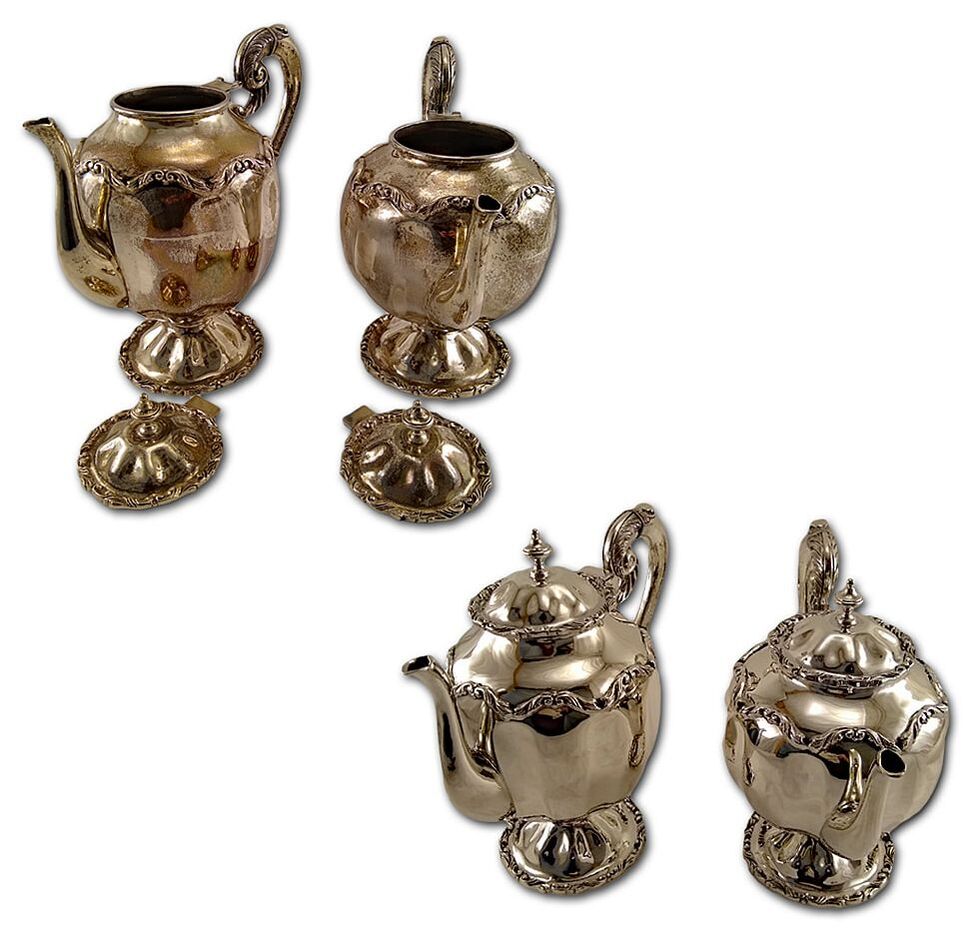
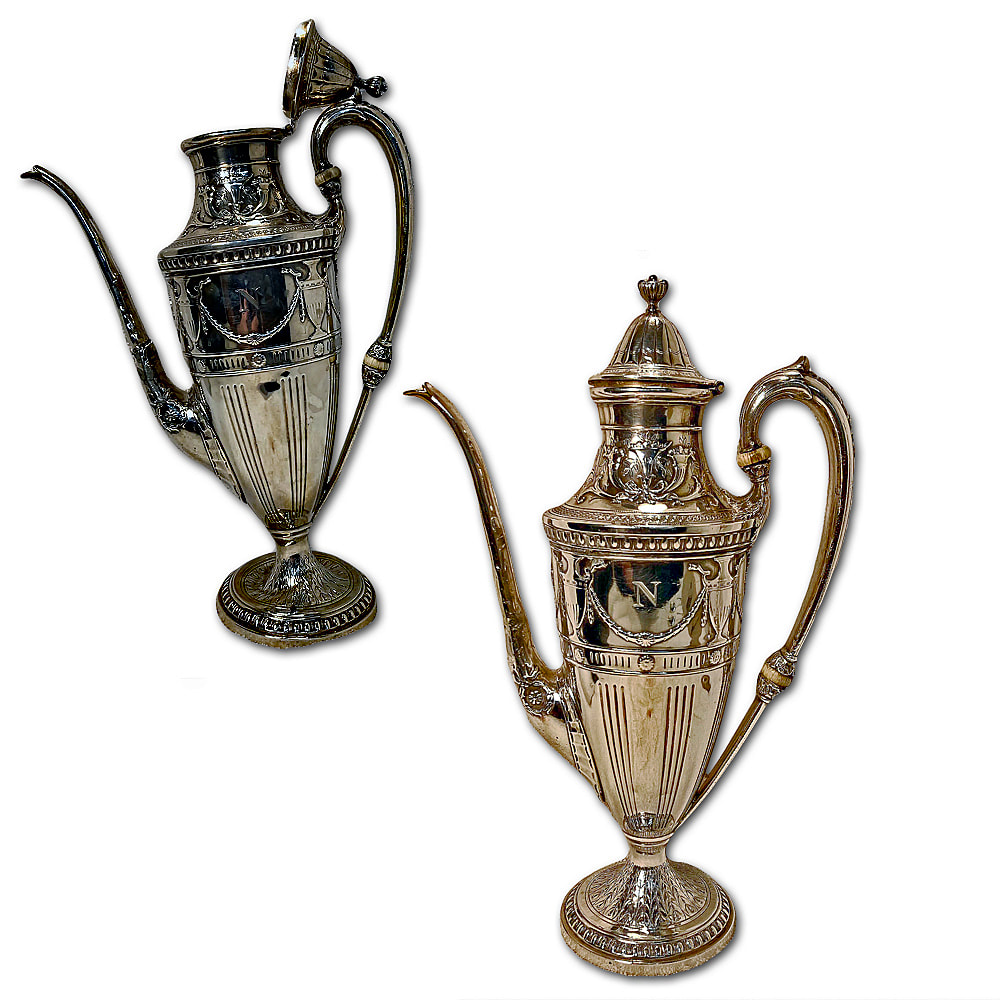
Tea and coffee services usually present a mix of issues: dented bodies, loose or cracked handles, out-of-square lids, and tired feet. Where possible, services are treated as coherent groups so alignment, stance, and finish read consistently across pots, sugar bowls, creamers, and trays. Old solder and past repairs are reviewed and adjusted where necessary so weight-bearing joins are stable before surfaces are clarified.
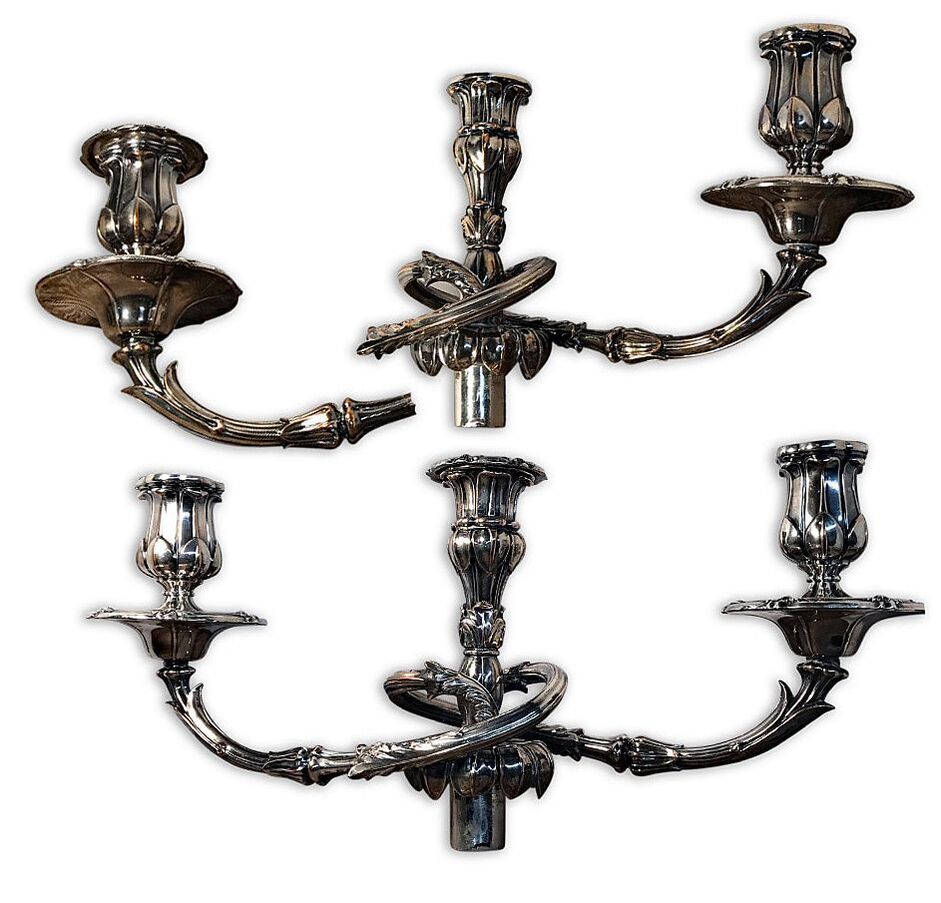
Candlesticks and candelabra may have bent arms, leaning stems, or misaligned nozzles. These elements are straightened, tightened, and stabilized so they sit square and support candles safely. Decorative silver—centerpieces, small sculptures, and desk objects—is treated with similar restraint. Local dent work, straightening, and join correction are carried out so profiles and modeling read cleanly without overworking older metal or removing history. |
PROCESS, SHIPPING, AND PROJECT SCOPE
|
Most silver repair projects begin with clear photos and basic dimensions. From these, the workshop can usually provide an initial treatment range and note any visible issues such as previous repairs, missing elements, or fragile areas. Once the piece arrives at the Philadelphia workshop, it is reviewed at the bench and a written estimate is confirmed before work proceeds. Only objects that can be safely packed, shipped, or hand-delivered are accepted; permanently installed or oversized pieces that cannot travel to the workshop are generally out of scope.
Repairs are sequenced so structure is addressed before surface. Old solder, tape, or adhesive residues from previous attempts are reduced or removed when it is safe for the underlying silver. Joins are test-fitted until alignment is correct, then bonded or silver-soldered as appropriate. Dent work is local and controlled to preserve thickness and profile. After structure is stable, finish tuning is carried out so ornament and repoussé remain crisp, engraving and hallmarks stay legible, and sheen is set from satin to mirror-bright per the piece and its intended use. Extremely thin metal, fatigued seams, or prior over-polishing can limit how far correction can go; alternatives are proposed when full restoration is not in the object’s interest. |
Send clear photos and dimensions to begin.
BEFORE AND AFTER GALLERY
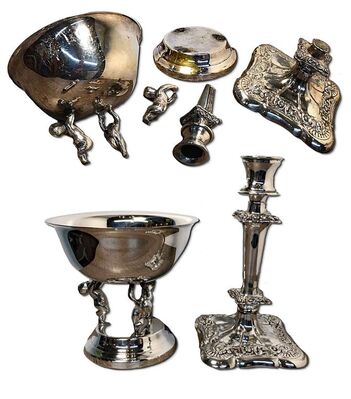
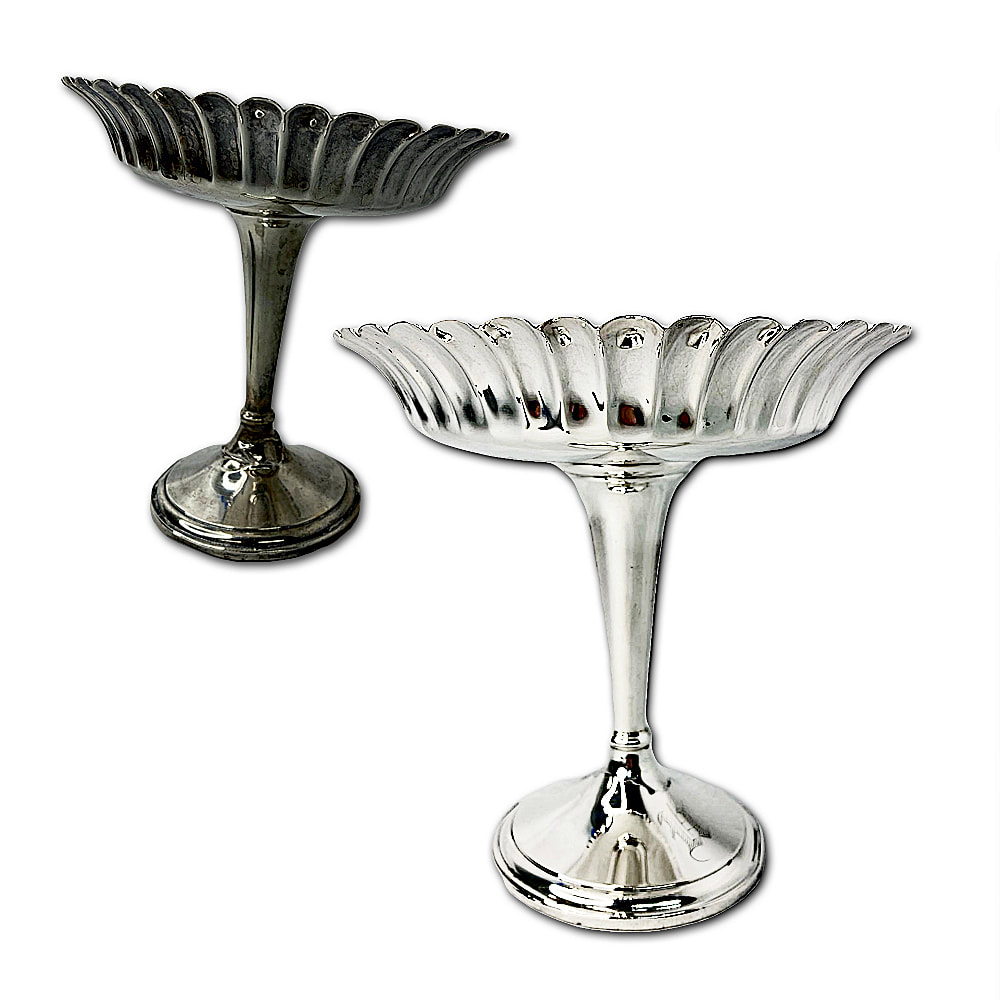
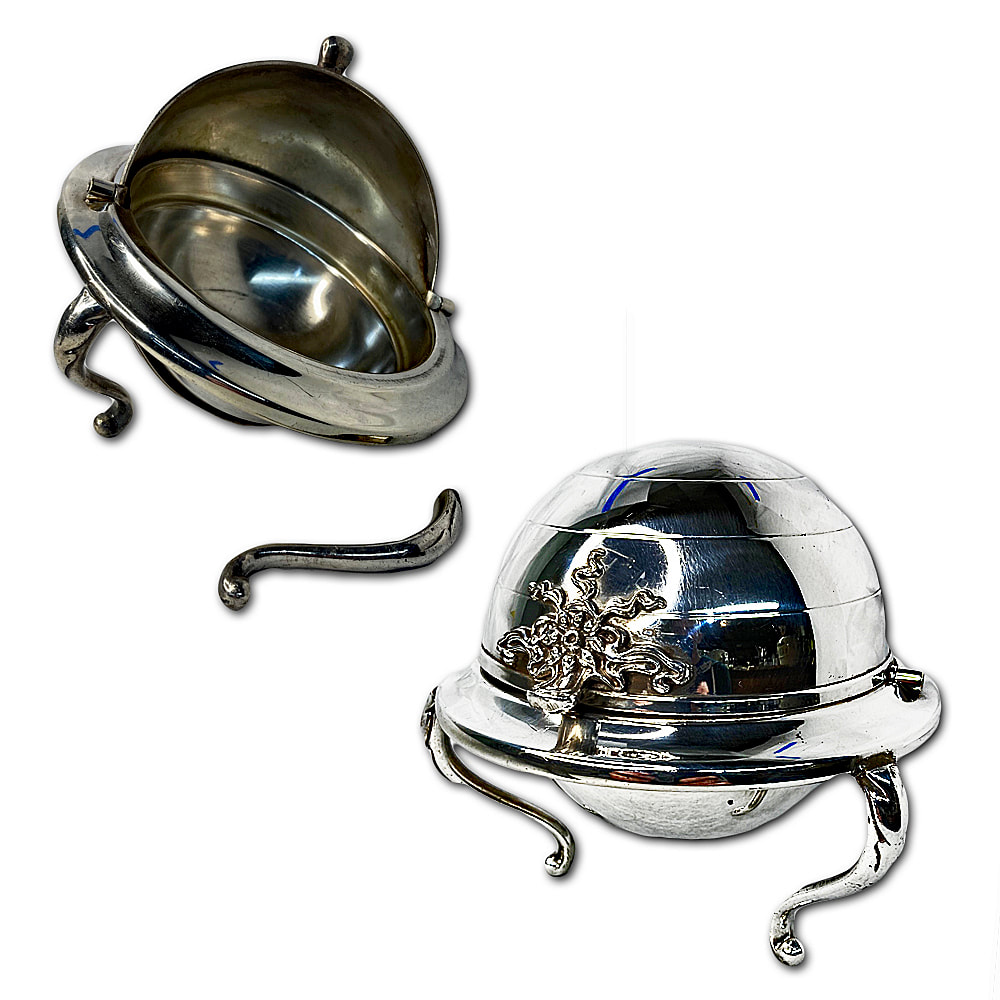
The silver repair gallery shows typical outcomes rather than a fixed standard. Some pieces—such as candelabra, trays, and covered serving pieces—are brought back to a high level of integration so that breaks and dents are difficult to detect at normal viewing distance. Others retain discreet evidence of age or earlier movement at the client’s request. Together, the examples illustrate how structural stability, dent reduction, and measured surface work can return damaged silver to cohesive display and careful use.
|
|
|
FAQ
WHAT TYPES OF SILVER OBJECTS ARE SUITABLE FOR REPAIR?
Chelsea Plating Company repairs sterling and silverplate tableware, tea and coffee services, trays and salvers, candlesticks and candelabra, bowls and compotes, frames, trophies, and selected religious or presentation pieces that can be safely shipped or hand-delivered to the Philadelphia workshop. If an object is closely related to these categories, photos can usually confirm whether it is a good candidate for restoration.
WHAT KINDS OF DAMAGE CAN YOU ADDRESS?
Typical repairs include loose or broken handles and spouts, bent rims and feet, local and broad denting, open seams and leaks, and misaligned lids or finials. Tarnish and surface residues are often reduced as part of finishing, but structural work is always prioritized so the piece is stable before any polishing is refined. Deep structural fatigue, cracks, or very thin metal are reviewed case by case, and any limits are explained before work begins.
WILL REPAIRS BE VISIBLE?
The aim is a calm, unified read at normal viewing distance. Joins are aligned and refined, and local corrections are shaped to the surrounding form. Under strong light or close inspection, some evidence of repair may remain, which is appropriate for conservation-focused work and for metal that has already had a long life.
CAN YOU MATCH EXISTING FINISHES OR LEAVE SOME AGE?
Where the metal allows, silver can be finished to a bright reflective surface, brought to a softer satin tone, or adjusted so repaired pieces sit comfortably with other items in a service or cabinet. Some age and wear are often left in low areas to keep an appropriate character. All finishes on working silver will develop natural wear over time, especially on high-contact areas.
HOW DOES SHIPPING WORK FOR SILVER REPAIR?
All silver repair work is carried out in the Philadelphia workshop. Before you ship, you receive packing guidance so pieces are supported and protected in transit. Clients ship pieces to the workshop, and when the project is complete, return shipping is arranged from the studio. No on-site repair is offered.
Chelsea Plating Company repairs sterling and silverplate tableware, tea and coffee services, trays and salvers, candlesticks and candelabra, bowls and compotes, frames, trophies, and selected religious or presentation pieces that can be safely shipped or hand-delivered to the Philadelphia workshop. If an object is closely related to these categories, photos can usually confirm whether it is a good candidate for restoration.
WHAT KINDS OF DAMAGE CAN YOU ADDRESS?
Typical repairs include loose or broken handles and spouts, bent rims and feet, local and broad denting, open seams and leaks, and misaligned lids or finials. Tarnish and surface residues are often reduced as part of finishing, but structural work is always prioritized so the piece is stable before any polishing is refined. Deep structural fatigue, cracks, or very thin metal are reviewed case by case, and any limits are explained before work begins.
WILL REPAIRS BE VISIBLE?
The aim is a calm, unified read at normal viewing distance. Joins are aligned and refined, and local corrections are shaped to the surrounding form. Under strong light or close inspection, some evidence of repair may remain, which is appropriate for conservation-focused work and for metal that has already had a long life.
CAN YOU MATCH EXISTING FINISHES OR LEAVE SOME AGE?
Where the metal allows, silver can be finished to a bright reflective surface, brought to a softer satin tone, or adjusted so repaired pieces sit comfortably with other items in a service or cabinet. Some age and wear are often left in low areas to keep an appropriate character. All finishes on working silver will develop natural wear over time, especially on high-contact areas.
HOW DOES SHIPPING WORK FOR SILVER REPAIR?
All silver repair work is carried out in the Philadelphia workshop. Before you ship, you receive packing guidance so pieces are supported and protected in transit. Clients ship pieces to the workshop, and when the project is complete, return shipping is arranged from the studio. No on-site repair is offered.
Send clear photos and dimensions to begin.
RELATED
• Silver Restoration and Repair — Overview
• Silver Plating — replating for silverplate objects
• Sterling Silver Polishing — sterling only; sheen from satin to mirror-bright
• Request an Estimate — begin with photos and measurements
• Silver Plating — replating for silverplate objects
• Sterling Silver Polishing — sterling only; sheen from satin to mirror-bright
• Request an Estimate — begin with photos and measurements