BRASS RESTORATION AND REPAIRRestoration of antique and contemporary brass fireplace pieces, candlesticks, hardware, and decorative objects with finishes tailored to age and use.
Chelsea Plating Company in Philadelphia restores brass objects for clients in the city and throughout the United States. Work ranges from antique brass restoration and brass repair of damaged pieces to careful brass cleaning, polishing, and tone adjustment for long-used household and decorative items. Typical projects include fireplace tools and andirons, candlesticks, coal and log bins, samovars, door and cabinet hardware, and small architectural fittings. All restoration is carried out in the Philadelphia workshop; on-site work is not offered. Many visitors first find the studio while searching for brass restoration near them and choose to send their pieces to Philadelphia after receiving packing guidance.
Send clear photos and dimensions to begin.
|
AT A GLANCE
|
HOUSEHOLD BRASS: FIREPLACE PIECES, CANDLESTICKS, AND DECORATIVE OBJECTS
|
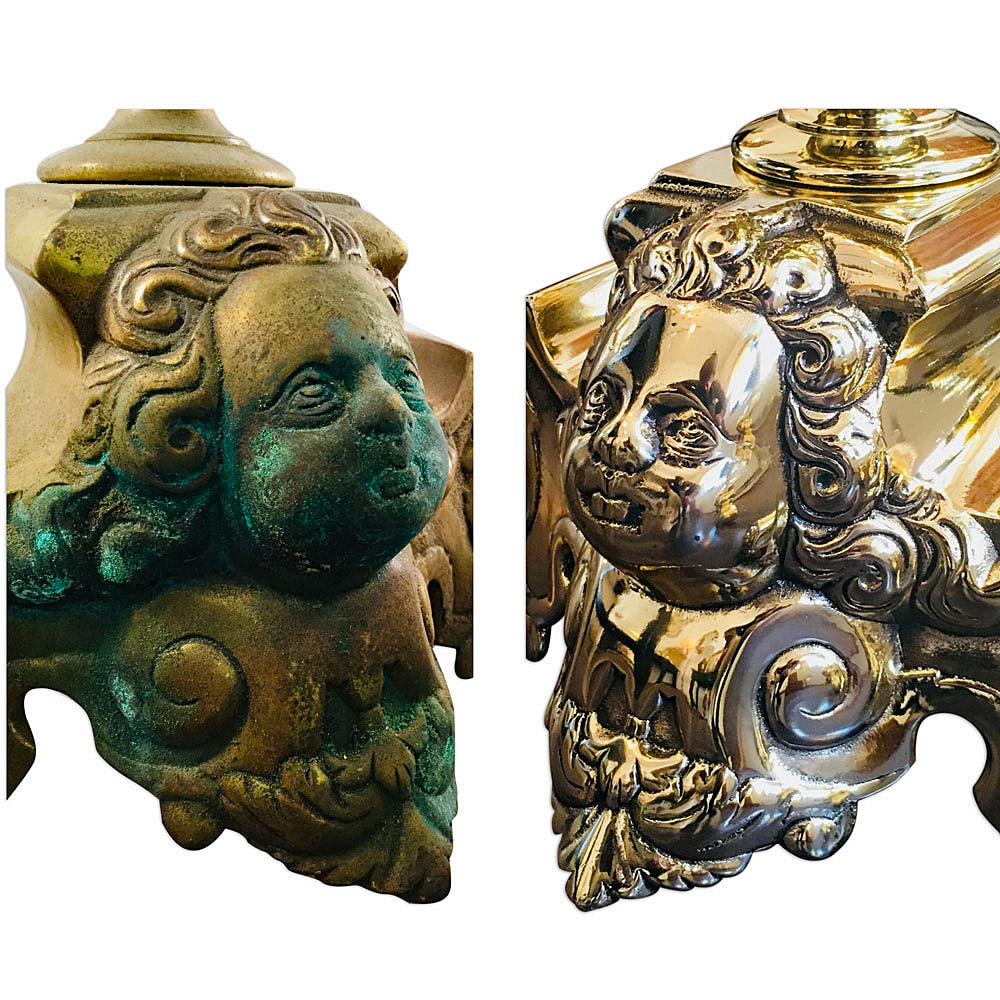
Many brass restoration projects begin with fireplace pieces that have darkened and dulled after years of use. Andirons, tools, fenders, and coal or log bins often carry heavy soot, tarnish, and uneven coatings that obscure their original forms. In the workshop, surfaces are cleaned in stages to reduce soot and oxidation, failed lacquer is removed where appropriate, and corrosion is moderated so the underlying brass can be read clearly again.
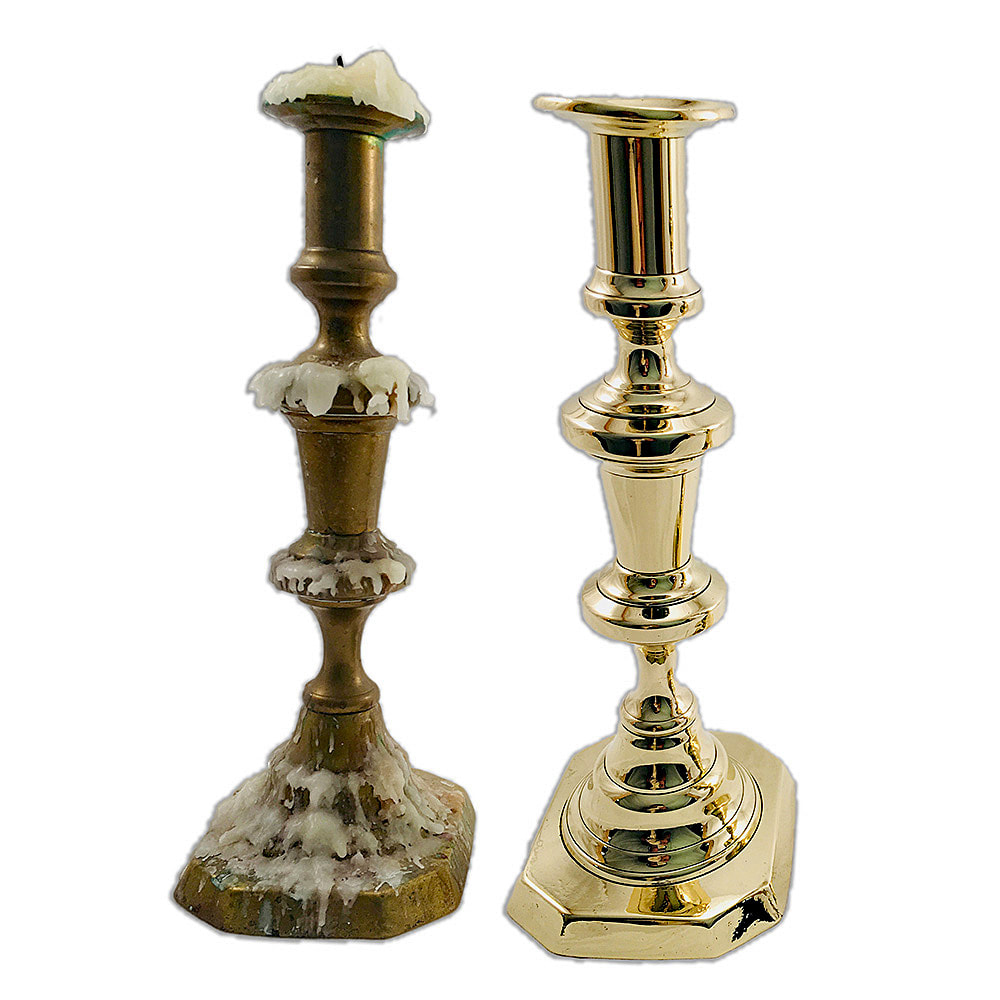
Candlesticks and candelabra are restored with particular care around drip pans, stems, and bases, where repeated use can leave wax, residues, and scratches. Polishing is carried out in a controlled way so that turned profiles remain crisp and decorative details are not softened. For decorative table or mantel objects such as urns, vases, and small bowls, the goal is a finish that suits how the piece will be displayed, whether as a brighter focal point or as a softened, age-appropriate surface. Some objects arrive with dents, minor deformations, or loose components. Where feasible, these issues are addressed before surface work begins. Feet may be straightened so pieces sit flat, handles tightened, and small elements re-secured so the object feels sound in use or display. The result is brass that reads as cared for and coherent, rather than newly manufactured. |
BRASS HARDWARE AND ARCHITECTURAL FITTINGS
|
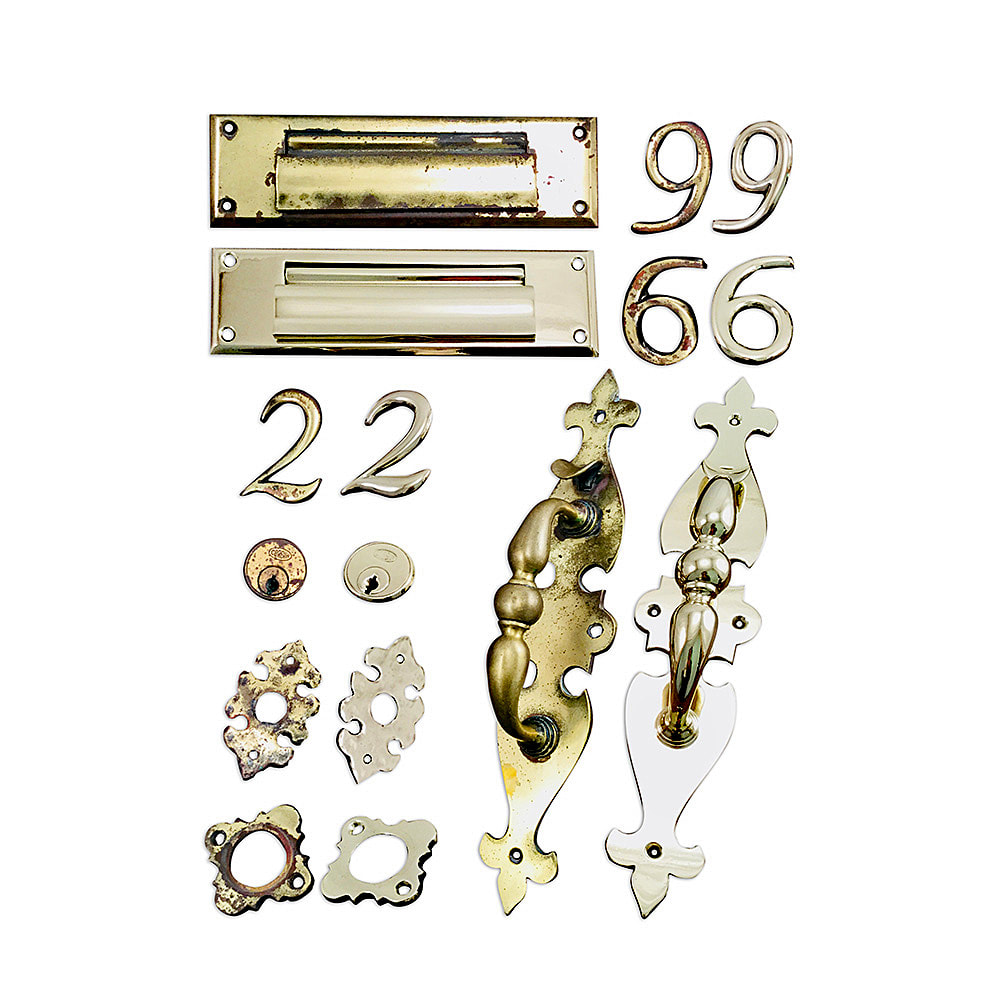
Brass door and cabinet hardware often carries multiple layers of paint, heavy tarnish, or uneven patina from decades of handling. The workshop restores door plates, knobs, hinges, escutcheons, knockers, mail slots, and related fittings, working to clarify both the function and the decorative elements of each piece. Paint and residues are carefully removed, surfaces cleaned and moderated, and any remaining coatings adjusted so details such as beading, scrollwork, and lettering become legible again.
For hardware that will return to active use, alignment and fit are as important as appearance. Knobs, spindles, and backplates are checked so they sit squarely and operate smoothly once reinstalled. Where full sets exist within a house or building, tone and finish level are discussed so restored pieces integrate with their surroundings. In some cases this means a brighter polish; in others it means a moderated sheen that respects age and use. Small architectural fittings such as stair parts, window latches, and decorative brackets are treated in a similar way. Corrosion is reduced, surfaces clarified, and profiles checked, with an emphasis on preserving casting detail and original tool marks wherever possible. Finish recommendations are guided by where the hardware will live and how often it will be handled. |
PROCESS, SHIPPING, AND FINISH EXPECTATIONS
|
Most brass restoration projects begin with clear photographs of the object or set from several angles, along with basic dimensions and notes on how the pieces will be used or displayed. From this information, the workshop can usually outline a likely treatment approach, discuss options such as brighter polish versus moderated patina, and provide a preliminary cost range. Once the object arrives in Philadelphia, it is examined in person and any refinements to the plan are reviewed before work proceeds.
Packing guidance is provided before shipping, including suggestions for padding, separating components, and double-boxing heavier pieces. Clients in the Philadelphia area often hand-deliver their brass by appointment. Clients elsewhere in the United States send pieces to the workshop using these guidelines, and return shipment from Philadelphia is arranged once restoration is complete. Even after careful restoration and, where appropriate, the application of a protective coating, brass surfaces are not entirely maintenance-free. The metal will continue to respond to handling and the environment over time. Care guidance is provided for each project, typically focusing on gentle dusting and occasional careful wiping. Strong household polishes, abrasive cleaners, and harsh chemical treatments are discouraged, as they can erode detail and disrupt carefully balanced finishes. Send clear photos and dimensions to begin.
|
BEFORE AND AFTER GALLERY
The gallery below shows a selection of brass restoration projects, including fireplace andirons and tools, coal bins, candlesticks, hardware, and decorative table pieces. Each example illustrates how tarnish, paint, and corrosion are reduced, structure and alignment are corrected where possible, and finishes are brought back to a level that suits the object’s age and daily use.
|
|
|
FAQ
WHAT TYPES OF BRASS OBJECTS DO YOU RESTORE?
This service focuses on household and decorative brass, including fireplace tools and andirons, fenders, coal and log bins, candlesticks and candelabra, door and cabinet hardware, knockers, mail slots, small architectural fittings, and related decorative pieces that can be safely shipped to the workshop.
WHAT KINDS OF BRASS DAMAGE AND WEAR CAN BE ADDRESSED?
Common issues include tarnish and oxidation, failing lacquer, paint splashes, panel and rim staining, corrosion in recesses, dents and minor deformations, loose components, and misaligned hardware. Where feasible, structure is stabilized, alignment corrected, and surfaces cleaned and moderated so the brass reads clearly and functions as intended. Very thin or severely compromised metal is evaluated case by case.
HOW DO YOU DECIDE BETWEEN A BRIGHT POLISH AND A SOFTER, PATINATED FINISH?
Before work begins, the workshop discusses how the object will be used and how it should sit within the room. Some pieces benefit from a brighter polish; others are better with a softened, age-appropriate sheen. In each case, detail, edges, inscriptions, and maker’s marks are protected, and patina that contributes to the character of the piece is moderated rather than removed.
DO YOU OFFER ON-SITE BRASS RESTORATION, OR MUST ITEMS COME TO THE WORKSHOP?
All brass restoration is carried out in the Philadelphia workshop, where tools, materials, and conditions are controlled. On-site polishing or restoration is not offered. Clients in the area usually hand-deliver by appointment, while clients elsewhere in the United States send pieces to the workshop after receiving packing guidance.
HOW DO I REQUEST A BRASS RESTORATION OR REPAIR ESTIMATE?
To begin, send clear photos of the object or set from several angles along with basic dimensions and notes on how the pieces are used or displayed. Using this information, the workshop can usually outline a likely treatment approach and cost range and confirm whether the brass is a good candidate for restoration. Final estimates are confirmed once the objects have been examined in person at the workshop.
This service focuses on household and decorative brass, including fireplace tools and andirons, fenders, coal and log bins, candlesticks and candelabra, door and cabinet hardware, knockers, mail slots, small architectural fittings, and related decorative pieces that can be safely shipped to the workshop.
WHAT KINDS OF BRASS DAMAGE AND WEAR CAN BE ADDRESSED?
Common issues include tarnish and oxidation, failing lacquer, paint splashes, panel and rim staining, corrosion in recesses, dents and minor deformations, loose components, and misaligned hardware. Where feasible, structure is stabilized, alignment corrected, and surfaces cleaned and moderated so the brass reads clearly and functions as intended. Very thin or severely compromised metal is evaluated case by case.
HOW DO YOU DECIDE BETWEEN A BRIGHT POLISH AND A SOFTER, PATINATED FINISH?
Before work begins, the workshop discusses how the object will be used and how it should sit within the room. Some pieces benefit from a brighter polish; others are better with a softened, age-appropriate sheen. In each case, detail, edges, inscriptions, and maker’s marks are protected, and patina that contributes to the character of the piece is moderated rather than removed.
DO YOU OFFER ON-SITE BRASS RESTORATION, OR MUST ITEMS COME TO THE WORKSHOP?
All brass restoration is carried out in the Philadelphia workshop, where tools, materials, and conditions are controlled. On-site polishing or restoration is not offered. Clients in the area usually hand-deliver by appointment, while clients elsewhere in the United States send pieces to the workshop after receiving packing guidance.
HOW DO I REQUEST A BRASS RESTORATION OR REPAIR ESTIMATE?
To begin, send clear photos of the object or set from several angles along with basic dimensions and notes on how the pieces are used or displayed. Using this information, the workshop can usually outline a likely treatment approach and cost range and confirm whether the brass is a good candidate for restoration. Final estimates are confirmed once the objects have been examined in person at the workshop.
Send clear photos and dimensions to begin.
RELATED PAGES
- Brass, Copper and Bronze Restoration — Broad restoration of brass, copper, and bronze lighting and metalwork.
- Brass Polishing and Cleaning — Surface cleaning and polishing for brass lighting, hardware, and decorative pieces.
- Brass Refinishing and Lacquer Removal — Tone adjustment and finish restoration for aged brass surfaces.
- Brass Bed Restoration — Structural and finish restoration for brass beds, rails, and finials.
- Request an Estimate — Send photos and dimensions to begin your project.